Search Posts
Gwalior Tourism
Gwalior : Gwalior's tradition as a royal capital continued until the structure of current day India, with the Scindias having their dynastic place here. The wonderful reminders of a glorious history have been protects with care, giving Gwalior an appeal exclusive and changeless. Gwalior include in the top tourism city in india and Gwalior Raj Gharana (Scindia Raj Gharana) one of the famous Raj Gharana in India. In Gwalior many famous place for visit and all tourist place tell the history of Gwalior.
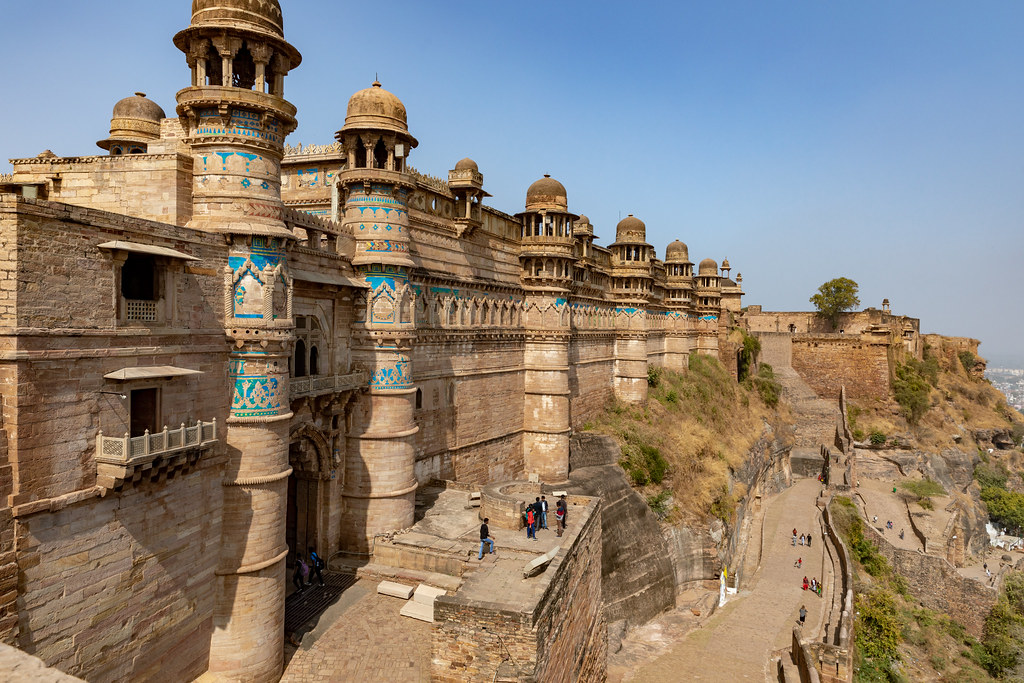
The Fort of Gwalior : Gwalior Fort is one of the largest forts in central Indian state of Madhya Pradesh. It was built in around 8th century on an isolated mound overlooking the Gwalior town. Gwalior Fort was built in two parts - The main fort, the Man Mandir and Gujari Mahal Palace. The 1st part was constructed during the early Tomar rule, while the 2nd part, the Man Mandir Palace and Gujari Mahal, were built in the 15th century by Raja Man Singh Tomar. The Fort spreads over an area of 3 square kilometer is built over massive sandstone rocks. The main entrance or gate, known as Hathi Pul (means �elephant gate�) as elephant could pass through this gate and is accessed after passing through 6 other gates. Apart from the Hathi Pul gate to the Palace, there is another large gate, called Badalgarh Gate. From the Tomars it passed to the Mughals, Marathas and the British. The Gwalior Fort lastly went from the British to the Scindias.
Sound and Light show in The Fort : The Sound and Light show at the Man Mandir Palace of Gwalior Fort gives you a glimpse into its magnificent past.
Come sunset, the deserted Fort is once again left with only memories for company. But now it comes alive every night. Well remembered events, and beautiful voices once more echo throughout its alone corridors and its dark and sad facade now glows with the colors of life. Red-gold, blue-green lights illuminate each corner and cranny of the beautifully tiled 'Man Mandir'. The story of this 'Pearl' begins with the deep and expressive narration by Amitabh Bachchan as Gopachal, the sutradhar (narrator).
Teli Ka Mandir : Teli Ka Mandir is an very old temple that is undoubtedly well-known for its excellent structural design. Situated in the Gwalior Fort compound, Teli Ka Mandir can be reached without difficulty by taking local resources of transport from Gwalior. The English version of Teli Ka Mandir is Oilman's Temple. Built in 11th century, Oilman's Temple is the oldest temple in the Gwalior Fort. This temple dating back to the 9th century is the highest building in the Gwalior fort, reaching a tallness of 100 feet.
Jai Vilas Palace and Museum : Jai Vilas Palace or Jai Vilas Mahal was built in 1874 by Maharaja Jayaji Rao scindia, the Maharaja of Gwalior, at a cost of Rs. One crore. It is built by Sir Michael Filose (known as Mukhel Sahib) and an excellent model of Europeans architecture, designed. The area of the Jai Vilas Mahal is 12,40,771 square feet. The palace has 400 rooms from which exclusively 40 rooms are transformed into Jiwaji Rao Scindia Museum. It is particularly famous for its large Durbar Hall; the interior of the Durbar Hall is 100 feet long, 50� wide and 41� in height. The 1st storey is of the Tuscan, the 2nd of the Italian-Doric and the 3rd is of the Corinthian order of structural design. Gilt and Gold fittings were used for decorating the Durbar Hall, which is decorated with a vast carpet and enormous chandeliers. Supposedly, eight elephants were suspended from the durbar (royal court) hall ceiling to check it could cope with two 12.5m-high, 3.5-tonne chandeliers with 250 light bulbs, said to be the biggest pair in the world.
Gujari Mahal : Inside the fort is some wonders of medieval structural design. The 15th century Gujari Mahal is a memorial of love of Raja Man Singh Tomar for his intrepid Gujar Queen, Mriganayani.
Sun Temple : A newly built temple dedicated to the Sun god, the Sun Temple is located near residency at Morar, Gwalior. The temple was built in year 1988 by G.D. Birla (the famous industrialist of India). Surya Mandir, also known as Sun Temple, is the copy of the famous Sun Temple of Konark in Orissa. Dedicated to the Sun god and is one of the pilgrimage places in the region.
The temple is built with delicate intricacy and skillful hard work. The exterior of the temple is built in red sand stone and the interiors are in perfect white marble. The external walls of the temple are decorated with many stone carved that shows Hindu Gods and Goddesses.
Man Mandir Palace : Man Mandir Palace situated in Gwalior Fort compound was built by Maharaja Man Singh Tomar. It is also called "Chit Mandir" or "Painted Palace". Palace is big structure with height of 80 feet. Its exterior is decorated with attractive designed tiles whereas interiors are decorated with paintings of human figures, animals and flowers.
Historical Monuments : Gwalior has a 100 m high, 3 km long hill, which structures a natural fort. Several Hindu temples and Man Singh fort occupy the top of the hill and there are Jain cave temples and Trithankara statues at the bottom of the hills.
Art Galleries and Museums :
Sas-Bahu Temple : Sas-Bahu ka mandir or Sahastrabahu Temple, is situated to the east of Gwalior Fort and was built in 1092 by King Mahipala of the Kachchhapaghata (Kachchhwaha) family. It was named SahastraBahu, represent God Vishnu with a thousand hands.
This temple is one of the best architectural marvels placed by Gwalior Fort. It is 32 meters long and 22 meters at its width. This temple mainly has three entries from three different directions. In the 4th direction, there is a room which is presently closed.
Suraj Kund : This is the largest of the structural reservoirs in the Gwalior fort and the most famous.
Memorial of Tansen : Memorial of Tansen or Tomb of Tansen is one more famous visitor’s attraction of Gwalior. It is located in the area of the tomb of Muhammad Ghaus. Tansen was the great musician and one of the nine gems of Akbar’s court. He chose the Muhammad Ghaus as his music teacher and learnt Hindustani traditional music and several Ragas. He was the follower of the Sufi saint.
Tomb of Tansen is surrounded by gardens and it is a great Example of Mughal architectural style. This is the monument constructed to memorialize Tansen.
How to Getting there:-
By Air: Gwalior is connected with regular flights from Delhi, Bhopal and Indore.
By Train : Gwalior is on the Central Railway’s main Delhi-Chennai and Delhi-Mumbai lines. Among other major trains, the Taj Express and the Shatabdi connect Gwalior with Agra and Delhi daily.
By Road : Gwalior is connected by regular bus service with Bhopal, Indore, Jabalpur, Ujjain, Chhanderi, Khajuraho, Agra, Mathura, Jaipur, Delhi, Chandigarh, Lucknow, Jhansi, Rewa and Shivpuri.
Famous Tourist Place in Gwalior
| Importance Place for Tourist & Visitors (direct links) |
|---|
| 1. The Fort of Gwalior |
| 2. Sound and Light show in The Fort |
| 3. Teli Ka Mandir |
| 4. Jai Vilas Palace |
| 5. Gujri Mahal |
| 6. Sun Temple |
| 7. Man Mandir Palace |
| 8. Monuments |
| 9. Art Galleries and Museums |
| 10. Sas-Bahu Temple |
| 11. Suraj Kund |
| 12. Memorial of Tansen |
| HOW TO GETTING THERE |
Author : Read Rife
You May Also Like
-
Read More
Gwalior Tourism
Gwalior Tourism Gwalior : Gwalior's tradition as a royal capital continued until the structure of c... -
Read More
Pachmarhi Tourism
Pachmarhi Pachmarhi : Pachmarhi is a hill station in Madhya Pradesh state, also called for the Pac... -
Read More
Chanderi Tourism
Chanderi Chanderi : Chanderi is a town of historical importance and a famous tourist place in Ashok... -
Read More
Indore Tourism
Indore Tourism Indore : Indore is a district and commercial hub of the Madhya Pradesh. It is situa...
Related Posts

Most useful key in Windows
Most useful key in Windows Maximum User of Microsoft Windows operating system, don’t know t...

Inspirational and Motivational Quotes
Inspiring and Motivational Quotes & Thoughts Inspirational and motivational quotes list...

Get healthy skin naturally by modifying daily habi...
Get healthy skin naturally by modifying daily habits Get healthy skin naturally by just modifying r...
Love Quotes
Love Quotes Love is a feeling between two cute hearts. Every guy needs a good girl and every girl...

दुनिया के 15 सबसे जह�...
दुनिया के 15 सबसे जहरीले सांप इस आर्टि�...

10 सबसे अच्छे शिकारी...
10 सबसे अच्छे शिकारी कुत्ते दुनिया मे�...
Leave a Comment
Popular Posts
- 12 Vastu Tips for Real Estate Developers: How to Design Prosperous Buildings
- South Facing House Vastu in Hindi
- How to Apply Vastu Shastra to a 20x40 Plot for Maximum Positive Energy
- East-Facing House Plans: Vastu Guidelines, Room Placement, and Design Tips
- 5 Principles Store Room Vastu: Essential Guidelines for a Balanced and Organized Space
- 16 Vastu Remedies for Health Issues: Enhance Well-Being and Create a Healing Environment
Comments